When there is an emergency, the time to prepare has passed.
Workplace emergency planning - Services - fire training
Initial and Blended Training solutions

Fire Extinguisher and Installed Medium Training
Email us for a quote !
This training session identifies the installed mediums and workplace hazards; has a theoretical & practical component where participants will be tutored to handle an multiple types of extinguishing mediums and installaions such as those installed in and on the perimeter of facilities.
We offer Accredited and Non-Accredited sessions for bespoke industry needs.
For accredited please review our nationally recognised training desk page > https://getfiretraining.trainingdesk.com.au/

ECO - Warden + First Attack Firefighting Training
Email us for a quote !
This session encompasses workplace emergency theory and practical. It informs and prepares the Chief Warden, Deputy Chief Warden, Area Warden & Warden, providing them with a comprehensive understanding of your emergency procedures to act as ECO- Emergency Control Organisation members.
We offer Accredited and Non-Accredited sessions for bespoke industry needs.
For accredited please review our nationally recognised training desk page > https://getfiretraining.trainingdesk.com.au/
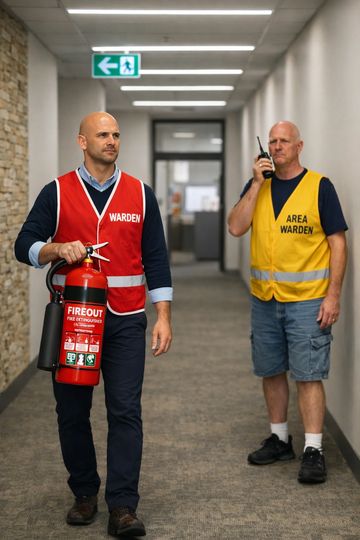
ECO Warden Training
Email us for a quote !
This session provides currency to the personnel chosen to operate as a ECO - Emergency Control Organisation member. The training focuses on the WARDEN structure, roles and responsibilities. We Identify current emergency planning procedures, installed emergency control equipment locations and use.
We offer Accredited and Non-Accredited sessions for bespoke industry needs.
For accredited please review our nationally recognised training desk page > https://getfiretraining.trainingdesk.com.au/
ECO - Emergency Control Organisation
Being well prepared and trained in the event of an emergency before first responders arrive is critical. Organisations ensure that emergency planning procedures are in place. These courses will equip ECO personnel with the knowledge and skills necessary to perform the role of fire / ECO Warden for various incidents in the event of a workplace during an emergency.
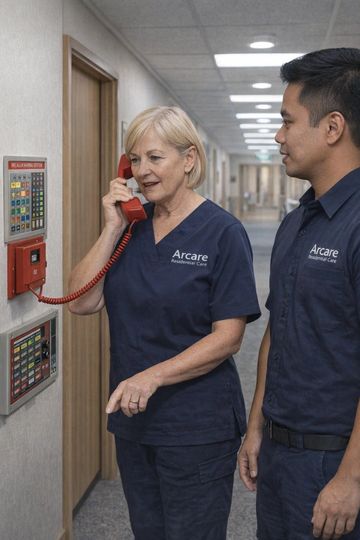
Combined - Healthcare Wardens and First Attack Firefighting Training
Email us for a quote !
This training caters for a dynamic workforce, providing a comprehensive understanding of the facility Emergency procedures, Installed Systems and to manage a staged evacuation specific to AS4083 - Planning for Emergencies in HealthCare facilities and the NSW Health Policy PD2010_024.
We offer Accredited and Non-Accredited sessions for bespoke industry needs.
For accredited please review our nationally recognised training desk page > https://getfiretraining.trainingdesk.com.au/
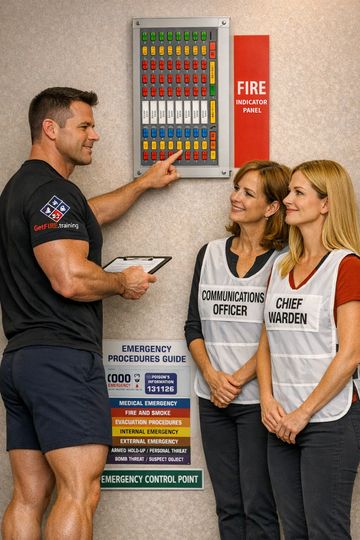
Fire Indicator Panel + Emergency Warning Intercommunication Panel Training
Email us for a quote !
This procedural training enhances the key trained ECO members to understand the operations and functionality of the FIP+EWIS. The effective use operation and use of the EWIS is essential to the safety of occupants within facility. Participants undertake practical contextualised scenarios.
We offer Accredited and Non-Accredited sessions for bespoke industry needs.
For accredited please review our nationally recognised training desk page > https://getfiretraining.trainingdesk.com.au/
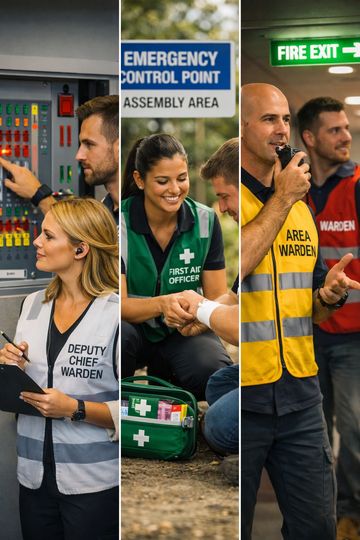
Observe and Report Evacuation Exercise
Email us for a quote !
We offer a reporting and Evaluation of your Emergency / Evacuation training exercise. We assist personnel to know their roles and responsibilities in an emergency situation in accordance with the workplace plans and procedures, and to test the workforce response to an emergency.
- Workplace emergency planning / emergency response plan and procedure familiarisation
- Identify required roles of workplace personnel in the event of an emergency which is more than just fire which is generally used as the drill.
- Provide comprehensive report that critiques the evacuation drill and suggest improvements to the Emergency Management Plan.
General Pricing and Services
First Response , Operation, Recovery and First Aid

Early Learning / Childcare Fire & Emergency Education sessions
Email us for a quote !
Early learning fire and emergency education sessions build critical life skills and emotional resilience in young children. These structured programs replace the fear of the unknown with practical, empowering knowledge by demystifying Emergency Personnel, familiarity sounds or alarm activations. Teaching the "Get Down Low and Go, Go, Go" technique through playful movement. Identifying Safe Places , Stop, Drop & Roll, Emergency Contact Knowledge.
Positive Framing + Low Stress Drills.
First Aid & CPR training for ECO personnel
Email us for a quote !
First Aid and CPR training for Emergency Control Organisation (ECO) personnel ensures immediate, life-saving responses during critical incidents. It equips wardens to stabilise casualties, prevents panic, and ensures legal compliance with WHS regulations, ultimately protecting lives and minimising workplace liability.
We offer Accredited nationally recognised training in your corporate setting. Visit our page to find out more > https://getfiretraining.trainingdesk.com.au/
Operate, Maintain, Secure and Recover a 4WD vehicle
Email us for a quote !
Operating a 4WD vehicle for workplace duty requires strict adherence to Work Health and Safety (WHS) regulations. Requirements include holding an appropriate driver’s license, completing nationally recognized 4WD training, conducting rigorous pre-start checks, and implementing safe journey management, vehicle recovery, and load-securing procedures.
We offer Accredited nationally recognised training desk page > https://getfiretraining.trainingdesk.com.au/
Documentation - Reporting - Restoration - Debriefing

Evacuation Diagrams
Email us for a quote !
The team at Get FIRE Training can prepare Evacuation Diagrams for your workplace or facility.
The Australian Standard AS3745: Planning for Emergencies in Facilities. Standards states these diagrams must: show the location of fire equipment, designated exit points, emergency assembly points and evacuation routes.
Our team of professionals will mark up the floor plan during their visit to your facility and design your plan.
We have a quick turnaround time and mount or deliver in PDF format.
Emergency Planning ( Plans and Development )
Email us for a quote !
Under the WHS regulation 43 - Duty to Prepare - PCBUs must ensure that an emergency plan is prepared for the workplace, including for workers who may work at multiple workplaces.
We can develop a plan to provide to the trained ECO personnel, workers and visitors know what to do in an emergency and encompass any nuances within the industry or corporate policy & procedures.
The emergency plan will be developed on a practical assessment of site, occupation, Emergency Planning Committee feedback.

Incident Debriefing Methodology
Email us for a quote !
Don’t just think about fire extinguishers, first aid kits and evacuation drills.
Think about your workers.
Incident stress management and debriefing is required to ensure the ongoing Health & Wellbeing of your personnel post incident. Check in's and learnings can significantly help with the improvement and return to operational conditions.
We can provide your ECO personnel the methodology, material and identify the process to offer EAP/ counselling support, using appropriately trained services.
Safety and Awareness
Identify and Assess Hazardous Chemicals + Understanding SDS
Email us for a quote !
Non-accredited training ; developed with reference to associated Australian Standard, WHS Legislation and SDS - Safety Data Sheet including classification and Labelling of Chemicals (GHS).
Understanding the main points of hazardous materials in emergency planning
Understanding of HAZCHEM Codes
Understanding of HazMat Guidelines
Appropriate selection and safely operate appropriate personal protective clothing and equipment
Methods of contamination that may pose an unreasonable risk to life, property and the environment.
Spill Kit Stowage, Applications and Use
Email us for a quote !
Equip employees with the necessary spill response equipment, PPE and Training.
Never put place employees in a position with unnecessary risk. If there is fire risk or toxic chemical, call the emergency services ‘000’.
This session includes familiarisation and donning of PPE process to ensure correct procedure prior to use.
The session has a focus on:
SAFETY
IDENTIFY AND INFORM
STOP THE SOURCE
PROTECT THE STORMWATER DRAIN
NOTIFY
CLEAN UP
DISPOSE APPROPRIATELY
Fire Safety Presentation
Email us for a quote !
Focusing on fire safety and prevention; providing attendees with an overview of potential common household emergency situations, showcasing Emergency + “000” App.
Our Trainer will deliver an information + Q&A session on various aspects of home fire safety and prevention topics. Our trainer will demonstrate working smoke alarms, extinguishers, and the use of a fire blanket to show participants how to smother fires.
There will be no practical use of the fire extinguisher by participants.